Showing posts with label events. Show all posts

Wednesday, 23 April 2014

Day 104: The joys of a clear thesis statement

What went well? 

  1. If you've been following this blog then you are well up to date with the journey/struggles I have gone through with this Buddhism x Mindfulness research paper! In particular, I had been tearing my hair out trying to figure out what I'm actually trying to argue, since the scope (and length) of my paper exploded and became overwhelming. Well, today, I went and saw a Learning Instructor at the Weingarten Learning Resources Center (the equivalent of an Academic Skills Advisor at Melbourne) to get some help with clarifying my thesis statement. That was a struggle too, and actually she didn't say all that much. But the process and the "deliberate practice" and continued thinking it required - just talking about my paper and ideas for more than an hour - unlocked ideas, and I thought of a thesis statement as I walked out the door. Here it is!! 
    • "The meaning and origins of the concept of mindfulness have been oversimplified, but this was essential for the mainstreaming of the concept, or the “mindfulness revolution”. This enthusiasm has, in turn, stimulated a new and dynamic discourse about the complexities of mindfulness and its relationship with Buddhism. "
  2. And, got really positive feedback from my professor about this thesis statement, so am feeling much better about this paper now:
    • My reaction: Yayyyyyyyyyyyy!!!!!!
  3. Went to a talk, "How the Heart and Mind Connect: The Neuroscience of Meditation." It was so profound and brought some clarity into my day.
  4. Had another class debate for Buddhism! I was reading a sermon in the role of a 10-year-old novice monk, and it was really fun.

  5. Positive psychology lecture today was on the positivity ratio controversy. It was so good to get a new perspective on the issue that helped me feel more compassion and respect towards Fredrickson, who has suffered so much from this controversy. I now realise that the blame rests not only on her, but mostly on her dodgy collaborator Losada (who must have known full well what he was doing with his absurd application of mathematics), as well as on the reviewers who never questioned a paper that didn't really make sense and let it through for publication, and every other psychologist who cited and talked about the paper without fully understanding it. We can learn a lot from these controversies, and it helps our discipline grow through self-reflection, even while the reputation of both the people involved and the discipline suffer too.


What did I learn? 

  • It really, really helps to talk your ideas through with someone for an extended amount of time, even if they aren't necessarily providing much input or reflecting on what you're said. Just talking about it stimulates thought and clarifies what you're trying to get across. So I've gone from a reaction of "MRAHHHHHHHHHH" (literally) every time I look at my paper to a feeling of calm confidence moving forward with restructuring and rewriting parts of it.
  • The grad student who delivered the guest lecture in positive psychology today had debunked the positivity ratio paper 4 years before Brown et al. did, but chose not to publish the paper because he was new to the field and it would not be gracious. So interesting to hear about the politics and tact required as an emerging academic.
  • With mindfulness, often attention and intention are uncoordinated. So, attention -> awareness and worldview -> intention, but these are often not working together. But, if we can coordinate them, so that we get attention and intention working together, then we'll be filling our awareness with stuff we actually care about.

Thursday, 17 April 2014

Day 98: This is what music is about

What went well?
  1. Went to a talk this morning at the PPC on "The Sounds of Kindness: Observing Positive Interpersonal Behavior in Everyday Life". I was totally mind-blown by the talk and all the possibilities it revealed. Basically, Matthias Mehl at the University of Arizona has pioneered the EAR (Electronically Activated Recorder) as a new method - it's a label microphone connected to an device that records random snippets of the sounds of everyday life. You can deduce a lot of things from the sounds the participant is surrounded by - where they are, what they're doing, who they're talking to, what kind of interaction it is, what kinds of words they're using, what they're feeling, how much they talk, etc., etc. I'm so excited for the potential for this new method to bypass a lot of the limitations of questionnaire measures, and to complement them too. I really hope to use it in my research in the future!
  2. Opera Scenes Dress Rehearsal was great!! It was so cool to see everyone else's scenes. Some of the acting was just hilarious. Oh my god, we have some seriously good actors in the midst. Annnnnd...in my duet, we kinda moved our pianist to tears. And she is embarrassed to have cried at Monteverdi, given that she studies later music (post-1840s). So, I took that as a good sign and a huge compliment!!!! I'm so excited for the performance tomorrow night.
  3. My friend from high school confirmed that she will be visiting me from Indiana (where she's studying) this weekend!

What did I learn?
  • Women are NOT more talkative than men. The book, "The Female Brain" made some completely unsubstantiated claim that "A woman uses about 20,000 words per day while a man uses about 7,000", but Mehl and his colleagues went through their EAR recordings and found that both sexes used about 16,000 words a day, and that sure, women spoke about 500 more words, but this difference was not statistically significant. Also, the three most talkative participants in that sample were males. Neurosexist myth debunked! Interestingly though, in self-reports, women report being more talkative than men. It just goes to show the force of cultural and societal expectations and norms, and the difference between self-concept and observed behaviour.
  • Kindness comes as a package, or "Kindness cluster": Empathy, Affection, Gratitude, Praise, Optimism. People who show more of one, tend to show more of the others.
  • People who show more everyday kindness laugh more and experience more positive emotion, and more meaningful social connectivity (socialising, disclosure conversations, and substantive conversations). But, everyday kindness seems to be uncorrelated with stress, depression, and life satisfaction.
  • Mehl and colleagues are using the EAR to study the "Sounds of Compassion" - whether a compassion meditation course actually affects daily behaviour. So exciting.

Thursday, 10 April 2014

Day 91: Flow

What went well? 

  1. Made a lot of progress on my mindfulness/positive psychology paper. Built my conceptual model, analysed what social-emotional skills different positive psychology lessons cultivate, and wrote another 900 words. It's coming along! But I'll get back to it next Thursday and really immerse myself in my Buddhism paper over the next week. Hopefully, a first draft of the Buddhism paper will be done by next Wednesday, and a first draft of the mindfulness paper done by next Sunday. This is doable.
  2. Went to a free dinner held by the Penn Vegan Society. It was amazing. The chefs (from Penn's catering company) were talking about what they prepared, and I was so impressed by their thoughtfulness. It was a really wonderful experience, and I really enjoyed the conversations I had over dinner too.
  3. Singing practice went well today.


What did I learn? 

  • How to make a really easy vegan snack - literally blending raisins & walnuts together, then making balls/bars.
  • Ramsburg & Youmans (2013) found that "Meditation Training Improves Student Knowledge Retention during Lectures".

Saturday, 29 March 2014

Day 79: Diana Damrau is Perfection

What went well? 

  1. Went to New York again to see La Sonnambula at the Metropolitan Opera. It was definitely the highlight of my week (along with Frozen, of course!). I initially booked my ticket purely because I wanted to see Diana Damrau perform, not because I knew anything about this opera, and it was totally worth it. I also happen to be working on a song from this opera now, so it was extra useful to see Diana perform it, and also to see it in context. I was completely awestruck by her performance. She has such complete mastery and command of her voice, and can sing in any position, even while dancing, without compromising the quality of the singing. She also has such a charismatic and elegant stage presence, and is an extremely soulful performer. Plus, she cartwheeled across the stage during Ah! non giunge (it's a very happy song)....it was so funny. I am such a fan. Just wow.
  2. Went to a vegan place for lunch, just 5 minutes away from the Met Opera House. It was great, and still feels like such a luxury to have so much choice.
  3. Started creating a Prezi for my class presentation on my research paper progress for my mindfulness class, and it was actually pretty fun. I love Prezi. I feel like it's a way to really creatively express ideas and draw connections. Here's a sneak peek:


What did I learn? 

  • I gained a much deeper understanding of the background behind Ah! non credea, Amina's aria in La Sonnambula. There's nothing like actually seeing the show and the relationships between the characters and how the plot plays out, to understand what the song represents and what needs to be communicated within it.
  • A meta-analysis by Zoogman, Goldberg, Hoyt, & Miller (2014) suggests that in young people, mindfulness has larger effects on psychological symptoms (e.g. anxiety, depression) than other outcomes (e.g. attention, mindfulness, quality of life, social skills), and that mindfulness has bigger effects on clinical than non-clinical populations.

Thursday, 27 March 2014

Day 77: Frozen

What went well?

  1. Watched Frozen at the Positive Psychology Center this evening!! It was such a highlight. The movie was heartwarming and a real feel-good movie, with great songs and a great plot. Also, I appreciated the food people made and brought - got a recipe for a vegan coconut pumpkin pudding (sooo good!!) and the post-doc I'm working with brought in a vegan chocolate and mint brownie/cake-type thing which was also amazing.
  2. Enjoyed today's Duckworth lab meeting on adult ADHD. It was really interesting to learn more about it.
  3. Gutted (this is my term for copying quotes into my research database) 6 references for my other mindfulness paper. Glad this is finally rolling along again, as it was pretty hard to get the activation energy to get going again after not working on it at all for about a month.

What did I learn? 
  • I guess the research and thought I put into this paper earlier actually was worth something, since I have a fairly clear idea of where I'm going with it now.
  • Adult ADHD can be conceptualised as involving two components: (1) executive dysfunction and (2) reward deficiency/motivation deficit. Also, there exists cognitive-behavioural therapy for ADHD. Really interesting.

Wednesday, 26 March 2014

Day 76: Invisible hand

What went well? 

  1. I was right about study being homeostatic. It turns out that I actually did the perfect amount of study for the sociology of mental illness test. It went really smoothly.
  2. Martin Seligman gave a guest lecture during the Positive Psychology lecture today on what's cutting edge in positive psychology. It was pretty cool to hear about it from the father of positive psychology, and to hear his visions and perspective on the politics of well-being too. I have to say, he is pretty visionary with his outlook on the global impact of positive psychology for well-being.
  3. Got through another article & book chapter for my Buddhism research paper.
  4. Went to a free violin concert at the Penn Museum. It was very virtuosic.
  5. Finished writing my reflection on studying psychology at Melbourne. Will link to it once it's published next week!


What did I learn? 

  • Martin Seligman has an idea about the "invisible hand" increasing well-being. The idea is that if you measure the well-being of say, a company or a country, and then publicly report these findings, and hold people accountable to increasing well-being, people will find local ways to increase well-being. It creates a form of "competition" because if say medical schools report higher levels of well-being than law schools, then law schools will want to find ways to improve student well-being, lest they lose potential students to medical schools. Similarly, countries don't want to look bad I guess.
  • I really need to try and figure out how my research paper will say different things than what has already been said. My reaction to about 3 papers I've read have been: "Gahhh, can you please stop writing everything that I'm trying to argue??" People have beat me to it!! But I'm sure I can find a way to make some form of a unique contribution, no matter how small.

Wednesday, 19 March 2014

Day 69: Cultivating wonder

What went well? 

  1. I went to a talk co-sponsored by the Positive Psychology Center on the Philosophy and Psychology of Virtue, and was sitting two rows behind Martin Seligman, the father of positive psychology. Then a few minutes later, Angela Duckworth joined him. I've been going to Professor Duckworth's weekly lab meetings so I see her all the time, but I took that moment to appreciate just how special it is to be here at Penn, in such close proximity to such well-respected and word-renowned and literally famous researchers. I still remember how surreal it was when I first visited the Positive Psychology Center, and now that I kinda work there, it's become somewhat normal - but when I think about it, I realise that it's still really, really cool. Just wow.
  2. Paul Rozin gave a guest lecture in Positive Psychology today, and it was fantastic. I loved his perspective on the need for more cross-cultural research because at the moment, it is so very American, and the idea of "cultural borrowing" - borrowing things that other cultures do well.
  3. Had my first rehearsal for Opera Scenes. Really enjoyed singing with my duet partner. We blend really well, yay!
  4. Wrote a reflection paper for my mindfulness class, which I decided to blog as well. It was actually quite a nice task, to take the time to think and write about mindfulness and human development.
  5. Found out that I topped my quantitative methods psychology subject last year! Can't attend the psych awards ceremony since I'm kinda on the other side of the world, but it was really wonderful news since I put a lot of effort into that subject.

What did I learn? 

  • Amy Wrzesniewski, the researcher who developed the idea of Callings (vs jobs & careers) and job crafting, did her undergrad at Penn and published 6 papers on different topics with Paul Rozin while she was an undergraduate. Just...what?!?!? How do you even...??? #inawe

Saturday, 15 March 2014

Day 65: MiEN Conference - Mindfulness as a Foundation for Teaching and Learning

I felt that today's program at the conference was so much more relevant and useful. I think yesterday's conference was more geared towards actual educators, although I still gained a lot of ideas and empowerment from the day. The main things I took from yesterday were: 1. Mindful listening. This really set the tone of the conference and carried into today too. 2. Whether we like it or not, we are constantly embodying certain values, attitudes, and mindsets in our behaviours, and influencing everyone around us - students, children, friends, family, strangers. It's kinda empowering but also a huge responsibility. Hence, it's incredibly important to be aware of our actions. Anyway, onto today!

What went well? 
  1. Professor Mark Greenberg's presentation was the absolute highlight of the conference for me. I would have come to the conference just to hear him speak; that's how valuable it was to me. His perspective was thoroughly scientific, grounded, practical, and nuanced, and it helped me with my thinking for my research paper and helped me to expand my views. I learned a lot! Appreciated the opportunity to meet him during the break.
  2. Also appreciated the Holistic Life Foundation presentation. These guys had a pretty different perspective, but it was absolutely beautiful and so heartful. It was inspirational to hear about the transformative work they've been doing, especially with "problem kids". These guys are so full of love.
  3. Had a great conversation over lunch with another undergraduate student (from Yale). It is so refreshing to talk about important issues in mindfulness with people who are engaged, passionate, and can also take a critical, nuanced and thoughtful approach.
  4. Really enjoyed learning about the iBme and .b programs for teenagers. For the latter, a high school teacher who also teaches mindfulness gave the presentation, and it was great to see what the program looks like in action, and to connect with someone who is actually doing it!
  5. Finished a blog post for my regular blog on Mindful Communication!
What did I learn? 
  • Insights from Mark Greenberg's presentation:
    • Contemplative practices should not replace other social-emotional learning programs because the former are rarely comprehensive, focusing mainly on the intrapersonal components of social-emotional learning competencies (the red segments), leaving out the interpersonal aspects. So, contemplative practices are not a cure-all! But, they can deepen the skills of each of these competencies.
      From http://www.casel.org/social-and-emotional-learning/core-competencies
    • Mindfulness and yoga have been privileged in research on contemplative practices, but there are so many more, it is such a rich area to explore, look!
      From http://www.contemplativemind.org/practices/tree
    • From a public health policy perspective, Greenberg would prioritise funding for  high school students, due to their metacognitive abilities, abilities to potentially understand the nature of the mind, and transition they're going through, based on the current state of evidence.
  • During the panel session, Mark Greenberg also mentioned that there is nothing like the development of a connection to a teacher for deepening mindfulness practice. Books, audiotapes and apps are useful tools, but they can't replace that human connection.
  • iBme = Inward Bound Mindfulness Education. They run retreats for teens that involve both silence and interaction. What's awesome is that even though the retreats are $795 for a week, they have never turned anyone away due to lack of funds. Last year, they gave $60,000 in scholarships. Awesome.
  • It would really suck to be a hostel manager. That guy does not sleep.
  • I realised that the reason that I had to pay an "exit fee" for the metro system the other day was that I was supposed to load an extra $1 onto the single-trip farecard (to pay for the card, I guess) on top of the stated fare. Also, even though it's supposedly "single-trip", you can actually trade-in the card to the machine and get 65c metro credit back on that card when paying for your next trip.

Friday, 14 March 2014

Day 64: Mindfulness in Education Network Conference - Courageous Schools Workshop

What went well?

  1. Got a lot of interesting ideas out of the Courageous Schools workshop today, even though it was somewhat different than expected. More on this tomorrow. I felt very mindful today. Was also inspired by the day to write a blog post on mindful communication - watch this space! I do have more thoughts on the day, but will share them in tomorrow's post after the whole conference!


  2. Another great vegan dinner. This is probably one of my favourite things about the US, tbh - the ability to find really nice vegan food really easily. Practiced mindful eating.

  3. Got an email from my mentor in Melbourne inviting a few of us to coffee with her and to possibly work with her on a positive psychology paper. I'm obviously not in Melbourne at the moment but still find it heartwarming that she's making such an effort to engage keen students and to mentor us by providing this kind of opportunity, and hopefully I can still be involved via email etc.
  4. The library at American University doesn't require student IDs for entry, so I managed to get a bit of work done there after the conference.


What did I learn?

  • Expect transportation dramas. Leave way more cushion time than you think you need. After my taxi didn't show up, Uber saved me again and I got to the conference only 20 minutes late, but it was more expensive than it needed to be.
  • Travelling is improving my confidence/risk tolerance. Walk 30 minutes alone in the dark? No problem! Jaywalk? Sure! Sleep in a room with a bunch of random travellers? Why not, it's cheaper! No need to plan transport ahead of time, Google Transit/Maps will get me there! I don't know if this is a good thing or a stupid thing. But I believe that with common sense and situational awareness, it's really ok.

Wednesday, 5 March 2014

Day 55: Harvard is hell for some

What went well? 

  1. Buddhism mid-term went very smoothly.
  2. Interesting sociology colloquium on what merit means in admissions to elite universities in the US & UK.
  3. Really interesting guest lecture (Dr Laura Kubzansky) in positive psychology today on the relationships between positive psychological functioning & physical health.
  4. Stouffer fellows night with my Buddhism professor as the dinner guest! It's always interesting to hear his stories, and this was no exception. Man, he has had some of the weirdest and funniest experiences. One of the stories he shared was a linguistics class he took as an undergrad at Boston, where the class ran from 12am-5am (yes, AM) once a week, by this totally weird professor, and they always drank lots during it. LOL. It's like something out of the movies?

What did I learn? 

  • A new term: "diversity bargain". Students at Harvard & Brown are happy for race to be considered in admissions (affirmative action), so long as it benefits them - i.e. if they get the benefits of increased diversity by having the opportunity to interact with people from different backgrounds, but not if they self-segregate, and certainly not if said student hadn't gotten in because someone from a racial minority got in ("If I hadn't gotten in, then..."). I thought this was intriguing.
  • Most research in the past pertaining to the relationship between emotions and physical health had focused largely on negative psychological states (e.g. Type A personality, depression, stress) & physical health, but only recently have they started to collect data on the relationship between positive psychological states (e.g. optimism, positive affect) and physical health. And yes, there is a huge effect!!! Not just wishful thinking. One study (I don't have the reference here) showed that participants who had high optimism at baseline had a 56% reduced chance of developing cardiovascular disease compared with the pessimistic participants (all were healthy at baseline). Another study showed that emotional vitality reduced risk of cardiovascular disease by 28% and optimism by 31%; these effect sizes are substantial as they are similar to the effects of diet interventions. I'm actually quite interested in perhaps looking at this line of research in the future - health psychology/public health.
  • My intro Buddhism professor hated, and I mean hated Harvard. He did his Masters degree at the School of Divinity, and said that he felt physically sick getting off the train each morning to get into campus - hated everything about the place - the students, the buildings, the food, the weather, the city. I was quite taken aback. This made me think back to the discussion we had in our lab meeting the other day about institutional culture, and this is adding to my growing realisation that this is something that will be very important to consider. Whatever grad school or post-doc or faculty position I choose in the future will need to be backed up with solid motivations and solid research into the culture, not just because they're commonly accepted to be the "best" institutions for research or whatever. So, why did he hate it so much? "Imagine a room full of alpha-males and alpha-females who are trying to be alpha-males, all striving to show that they're better than each other, and that this is encouraged by the professors. And professors can't even be professors because you can never access them." Another story he told us was this time a student came up to him (this would have been about 15 years ago) and said, "I have a problem." He says, "Ok, let's talk about your problem." The problem? She got a B+ on a paper! It was the first time she'd ever gotten a B in anything, and she was all like, "What are we going to do about this?" Obviously, the professor was like wtf?! (not literally, but probably thinking that) and basically said, "I dunno." So she pressed him, and he was like, "Why don't you talk to the President about it? I'll come to the meeting." And she was like, "Ok, I'll do that. But you're not going to be at the meeting." Prof: "Too right I'm not. Because you're not going to get a meeting! You'll be laughed at if you call her." So then the student asked, "Why did I get a B+?" And he said, "Now you're asking the right question. Can you tell me why you shouldn't have gotten a B+?" And she couldn't answer it. Fascinating. Just fascinating. I can't believe how naïve I was (and to some extent still am) and susceptible to the "halo" of Harvard as the ideal destination, a priori. More critical thinking required. As an aside, he did love UC Riverside! From what I've heard, I'm liking the sound of the institutions on the West coast.
A few random pictures from the day

"Good luck on exams! Stay positive! It's almost SPRING BREAK"

I never noticed that the building behind Hummus was this awesome!

Colourful flowers at the grocery store

Saturday, 1 March 2014

Day 51: Magic Gardens and Casting Call

What went well? 

  1. Magic Gardens Trip!!! Bottom line: If you're in Philly, you should go. Seriously. I loved this place. It was super colourful and creative and expressive...look! Also, the whole trip (transport, entry, food) was covered by Stouffer. Thanks again, Stouffer!


  2. Auditioned for Opera Scenes. Sang Ach ich fühl's from Die Zauberflöte. It went really well, and the organisers gave me some really encouraging and positive feedback. Mindfulness definitely helps my singing, in terms of staying completely focused, in character, and putting the intention and deliberateness behind every phrase and word. It was this intensity that they commented on. Really looking forward to finding out what scenes they choose, and what I'll be singing!
  3. Still got a lot of work done. Prepared most of my flashcards for my intro Buddhism mid-term on Wednesday. Just need to finish doing that, then plan my practice essays, and then memorise the key ideas (and page numbers for citations, yeah I know, what??).

What did I learn?
  • I really enjoyed meeting new people on the trip today. Had some nice conversations, discovering commonalities. That's kinda the thing with just being willing to sign up for activities and opportunities by yourself - it just makes you more open to starting conversations with more people, thereby creating more opportunities for meeting awesome new people!

Miscellaneous thoughts 

This actually belongs more in yesterday's post, but it's something I've noticed in general at Penn. People here are frazzled. That's the word I would use. I walked into my lab meeting yesterday, and man, everyone was frazzled about everything they had to get done and all the pressures on them. And it's not just the students, as we were discussing in our lab meeting - this culture of frazzledness is pervasive, including faculty and researchers alike. I wondered if it was just a feature of academic careers per se, assuming that they're all high-pressure jobs where you fight to prove your worth for tenure, publish or perish etc., but apparently it is not the case. Rather, it really depends on the prestige and culture of each institution. Hence, it is something I will really have to take into consideration in future when thinking about graduate schools, post-doc positions and eventually where I would like to end up working. I don't know if I'd be willing to completely sacrifice work-life balance/stay long-term in an atmosphere described by a fellow peer as a "dark cloud" (I haven't really felt it, being just a temporary outsider, but have noticed the effects on others' morale and wellbeing) for the (numerous, actually) advantages of a top institution, but maybe it's something worth doing for a few years if it's an important career move. On the other hand, perhaps I would thrive in such conditions! Some do (or seem to, anyway). Stress per se isn't bad - it's our beliefs about stress, and our resources (especially social and psychological) that ultimately determine how we fare. I seem to be thriving here, but again, I have chosen a relatively light courseload and am under a lot less pressure in terms of grades. So I'll try and talk to some more faculty & graduate students and see what their impressions are.

Friday, 28 February 2014

Day 50: Buddhism is uber confusing

What went well? 

  1. Had a really productive positive psychology lab meeting, where we made progress on making decisions about the study design of a new intervention that we're going to pilot. I'll basically be trying to draft up a detailed methods section next week.
  2. Saw my intro Buddhism professor briefly to ask some questions about Buddhist ideas about rebirth. It was simultaneously helpful yet confusing, but nonetheless a stimulating & enjoyable discussion. It's one of those subjects, I guess...
  3. Went to a Philomathean society meeting, and the main presentation & all of the mini-presentations by prospective members were all very high-quality. 


What did I learn? 

  • There's going to be another person joining our positive psychology lab, who has a background in marketing, social media, project management etc. She's a professional who now has an interest in positive psychology so wants to volunteer to help the post-doc we're working with out! This seems to be such an American thing. People are so willing to give so much of their time and expertise for free to gain experience over here, whereas it seems like that's not something that generally occurs to people in Australia and New Zealand. I'm really looking forward to meeting her.


Sunday, 23 February 2014

Day 45: Awesome + ermahgahhd

What went well? 

  1. Had the best day ever today hanging out with a friend. We bought rush tickets to see Porgy & Bess, and had great conversations over Starbucks, lunch & walking back to campus. Also, singing Glee on the way back. So awesome :) And the weather was great!!!!! 12 degrees feels WARM.

  2. Part of the "Gayborhood". This is actually a thing!
    An organ in Macy's department store. A super cool building.
  3. Went to the Opera Scenes information session. It looks like a great opportunity, and I'm really excited for it. Basically, they're trying to put together a show comprised of a series of short scenes from operas. And it'll only be about an hour a week. Casting call is next week.

What did I learn? 
  • The importance of practice for any skills. I've offered to help out the founder of the Calm Clarity project with any research-related skills, which has now turned into the need for me to actually remember and use the statistical skills I learned in Research Methods for Human Inquiry last year, which are somewhat rusty now. It's a great opportunity to practice, actually. Also, it feels really cool to be able to say, yeah I can actually do that! And be able to actually apply the skills I learned. And I'm learning a lot - for example, I think we might need to use a mixed-design ANOVA, which I currently don't know how to do, so this is an opportunity to figure that out. This is definitely a stretch task for me though, hence the ermahgahhd - but this must be an example of deliberate practice in psychology! Good.
  • To look up the plot of shows before seeing them. I was sooo confused while watching Porgy and Bess because the text wasn't always clear, so didn't follow the plot that well. It was still good though!

Saturday, 22 February 2014

Day 44: Pleasant surprise

What went well? 

  1. My friend invited me to a party at the LGBT centre, so being the yes person I now am on exchange, I went. It was fun hanging out even though it wasn't exactly wild. Nonetheless, there was some "interesting" dancing going on. Exhibit A: 

  2. I'd left my laundry in the dryer because I was running late to meet people. Always a bad idea. But not always, apparently?? When I got back, anticipating that my clothes would be haphazardly thrown into some corner of the laundry room, I found them neatly folded in a pile on the bench. It was an incredibly pleasant surprise. Wow. Thank you, kind and considerate Stoufferite, whoever you are!


What did I learn? 

  • A few exercises to strengthen my ankles for yoga.
  • There are genuinely considerate people here. I am inspired.
  • I can't send empty messages to the ListServ. See, I wanted to send a reminder for Stouffer yoga today, so sent an empty message with the subject: "Free Yoga! Mayer Playroom! Now!! <eom>". eom = end of message. Thought it would be parsimonious but apparently you actually have to put something in the message.

Tuesday, 18 February 2014

Day 40: Taco Tuesday

What went well? 

  1. The Stouffer GAs organised a taco night. I was really impressed by the effort they put into preparing the food.
  2. Saw my Contemplative Sciences professor about ideas for my paper. I had in mind the topic of what role mindfulness should play in a positive education curriculum. And I am now more confused and less certain of where I'm going now, but it is a good thing because it means that my ideas have been radically challenged and that I am learning. In that way, it was actually really helpful, and I will let these ideas percolate.
  3. This email from my Intro Buddhism professor made me smile. I was amused.
    • "I trust you are well and enjoying the slightly warmer weather. I saw a worm today. I hadn't seen one in a long time. The worm, in my opinion, seemed to be enjoying her/himself. So that was good. But there is no good. That is an illusion. But I think the worm was really there. Did my mind create the worm and the very concept of good? Is weather a concept or a phenomenon? Well, maybe, hum?..."

What did I learn? 

  • Libet conducted some studies where it was experimentally demonstrated that there were unconscious electrical processes in the brain that preceded conscious decisions to perform volitional, spontaneous acts. Disturbing implications for free will - are spontaneous acts the product of free will or subconsciously predetermined by electrical impulses in our brain? Are our conscious "decisions" merely post hoc rationalisations of the inevitable?
  • The term "positive education" doesn't seem to be that popular in the US. My professor had never heard of it. Also, from our discussion, it seems like PosEd is perhaps not a new approach but just another term for social-emotional learning, which has been around for awhile. Hmmmmmmmm....what's in a name?
  • This is happening on Sunday!! I'm definitely interested in learning more!


Sunday, 16 February 2014

Day 38: New York! Part 2

What went well? 

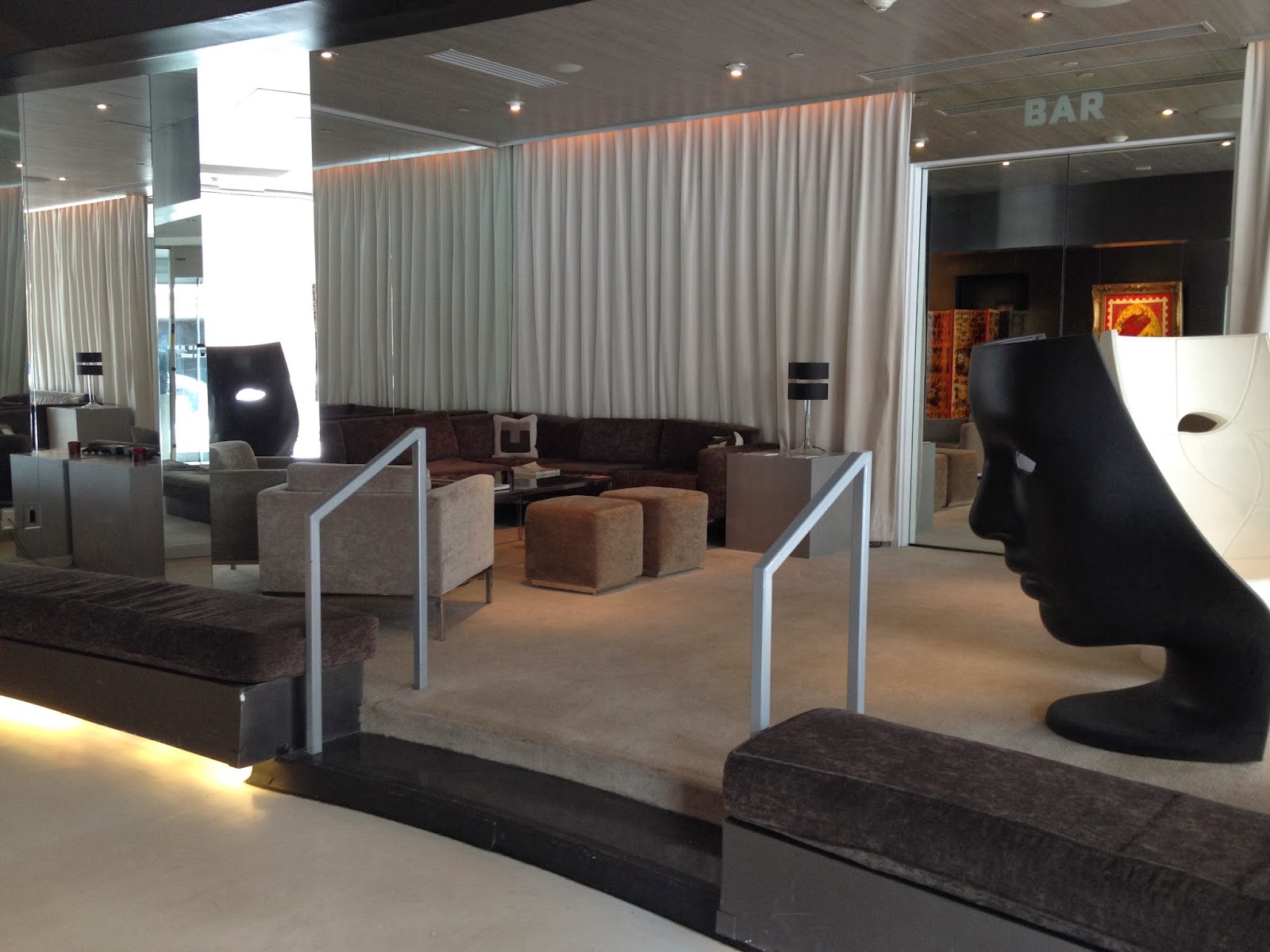
  1. Slept soooo well in my very comfy hotel bed. The hotel (The Out NYC) was really nice, but also very reasonably priced ($95 for the night) since I was in a 4-person shared room -  you get your own lockable closet & there are curtains around each queen-sized bed. I didn't have to talk to (or actually even really see) anyone I was sharing the room with. Here are some photos of the public spaces in the hotel. It's pretty hipster.
    •  


  2. The hotel was only about a 15 minute walk from Times Square. Felt like I got a real "New York" experience here:
  3. So. Much. Stimulation. Flashing billboards everywhere. #sensoryoverwhelm
    People lining up to buy same-day discounted tickets for Broadway shows. Good to know they exist! Might look into it for a future trip.
  4. Passed a fruit stall on the way to the bus back, and bought a HUGE (like 4-5x the normal size) punnet of blueberries for just $5. #winning
  5. Saw the Soweto Gospel Choir perform. (free ticket again!) It was a very vibrant, energetic performance.

What did I learn? 
  • Environment matters. You know, I'm usually not a very materialistic or consumeristic person, but surrounded by all the shops in Times Square, I suddenly felt like I needed to, like, buy something. It wasn't that bad though, I only bought a top.

Saturday, 15 February 2014

Day 37: New York! Part 1

What went well? 
  1. My bus had wifi, so I managed to plan my trip on the bus. I seriously didn't know where I was going until I got there.
  2. Had a productive bus ride too. I've recently become very interested in the idea of deliberate practice, which is a key ingredient for mastery, so I came up with a checklist for deliberate singing practice (targeting my key vocal/musical issues). I'll print it out and have it out whenever I practice to make sure I'm on track.

  3. Really enjoyed mindfully appreciating the exhibits at the Rubin Museum of Art. It's a museum especially dedicated to artwork from the Himalyan region, including Tibet, India, Mongolia, etc., especially Buddhist artwork. Also, I had a great tour guide who was very comprehensive and the information about some of the figures and some tips on reading Buddhist art really helped with understanding the rest of the exhibit.
  4. Photographic reproduction of part of a Lukhang Temple mural.
    Skull-shaped bone prayer beads. I had no idea prayer beads came in such diverse shapes.


  5. I was about to book an Uber car for 2.25x the usual price because of peak demand in the blizzard, to get to the Met Opera, since I was cutting it fine (It was already 7.30pm; the show started at 8pm). But just as I was about to agree to pay a ridiculous amount of money for transport, a taxi pulled up!! So it was $10 (including generous tip) rather than like, $30-$40.
  6. Got a reply for a thank you note I sent (in which I said, "no reply required" - make life easier for busy people) to one of the faculty fellows who organised the Working Moms dinner, and she offered to chat another time to answer any other questions I have. Very kind and generous... :)
  7. Saw Renée Fleming star in Rusalka at the Metropolitan Opera. She was phenomenal. Every note was just so expressive, full of pain and longing. Here are some photos from the Opera House:


What did I learn? 

  • How to navigate the subway system. Also, the importance of asking. One question avoided me being transported to the opposite side of town.
  • Always leave MUCH earlier than you think you need to leave for an event, especially if it's snowing.
  • Some basics about reading Buddhist Art. Also, that "art" in the usual Western sense of "aesthetics" was a relatively recent idea for Buddhists, who traditionally used art for very practical, didactic purposes. Since not everyone could read, art was a very important storytelling device.

Thursday, 13 February 2014

Day 35: Working Moms Dinner + Yet another Snow Day!

What went well? 

  1. Class got cancelled today due to snow (yes, again) but the guest speaker got rescheduled so it was ok. Plus, I'm glad it wasn't Intro Buddhism or Sociology of Education that got cancelled - I would have been very sad to miss those awesome classes again!!
  2. Got heaps of research done. Am starting to see some trends in the way "mindfulness" has been used historically. Earlier usages (16th-18th centuries) were primary in a Christian context, to do with ideas about awareness or memory (especially of God or his qualities), whereas in the Western psychological literature, the earliest usage was around the start of the 20th century, and uses were quite divergent in the first 80 or so years. Watch this space.
  3. Went to a Stouffer event, a Working Moms dinner, where we had a conversation with four women working at Stouffer who are also mothers. It was really interesting and actually pretty enlightening. My key takeaways were:
    1. There is never a perfect time to have a child. They will turn your life upside down regardless of when it happens.
    2. What you think you want now may not be what you want in a few years' time. Keep an open mind and be creative with career possibilities.
    3. There is no one solution for balancing your career with your family. It all depends on your personality and your unique situation including variables like the presence of family members, the supportiveness of your partner, whether your career is one where you can take a break, and your financial circumstances.
    4. We should be talking about these issues, we shouldn't be afraid to mention that we have children (for fear of not being taken as seriously by other academics etc.), and if we have the power, we should be actively creating supportive workplaces if we want to change the culture and the structures.
    5. A supportive partner is key.
    6. There may be "seasons" where you focus on building your career, where your partner makes sacrifices for your career, where you make sacrifices for your partner's career, where you both make sacrifices for your family.

Tuesday, 11 February 2014

Day 33: Free tickets, woo!

What went well? 

  1. Had an appointment with a librarian this morning, who pointed me to a lot of helpful databases for my research. Also figured out how to use Google Books more effectively - you can choose to limit it to certain dates. Use your librarians!
  2. The TA for Neurolaw (which I'm now just auditing) brought coffee for the break. They weren't kidding about providing coffee!! (it's a 3-hour-long class)
  3. Saw Gerald Finley (baritone) and Julius Drake (piano) in concert, performing Schubert's Winterreise song cycle. It was beautifully and devastatingly expressive. As I said in a thank-you note to the Year of Sound funding committee (at Penn) who funded the free tickets to this concert, "Live classical music is always an uplifting and spiritually enriching experience that teaches me so much about the human experience. I really appreciated this opportunity to reconnect to the realm of emotions and artistic expression to balance out the otherwise highly intellectual focus in my daily life as a university student. Thank you for enriching the experiences and well-being of Penn students in this way." Also, I was glad to be able to give one of my tickets to a stranger who was about to buy a ticket at the box office, because one of my friends couldn't come so I had a spare one. It was a nice moment.
    Kay & I at the concert.

What did I learn?

  • Music, and art more generally, is a profound way of making meaning out of and communicating an understanding of the human experience and of suffering.
  • The case of Mr Oft (Berns & Swerdlow, 2003), who was a middle school teacher who made sexual advances on his 12 year old stepdaughter when he was 40. He had no history of pedophilia, but then started secretly started collecting child pornography and developing irresistible urges. Well, it turned out he had this brain tumour, and when they removed the brain tumour, the urges stopped and all was well for a few months. But then the tumour started growing again, and the urges came back. It really brings up questions of responsibility and free will: "My brain made me do it"?? We had a mock trial in class, and the four psychiatrists in the room (the professor + three forensic psychiatric fellows who are also participating in the class) agreed that he should be found not guilty by reason of insanity under the Irresistible Impulse Test but not the M'Naghten Test (which requires defendants to literally not know that what they were doing was wrong). Of course, we only got part of the story; in an actual trial they'd consider more than just the neurobiological evidence, like his personal history, and other aspects of his life.
  • Uber is a great service. It's basically a personal driver (or taxi) at demand. They have an app where you just request a driver and they locate you and pick you up. It's connected to your credit/debit card, so the payment gets taken care of automatically. They have a deal for new members, so if you use the promo code uberinlove you get $20 credit, which is what Kay and I did, so we basically got a free ride to the concert and back. And the cars are really nice!

Saturday, 8 February 2014

Day 30: West Philly

What went well?

  1. Went for a walk to West Philly with a friend. Discovered a few wonderful things on the way, including a farmer's market (!!!!) just a couple of blocks away, a food co-op, and lots and lots of cool cafés. Will definitely keep exploring, especially by foot.

  2. This is a bad photo, but if you look closely, there are tables with lots of fresh produce.
  3. Started a Coursera course, Teaching Character and Creating Positive Classrooms. So far, the videos are really excellent. It's free, so if you're at all interested in positive education, and the role of self-control and grit in success, I highly recommend it!
  4. Watched a series of one-act plays on campus. There were 6 plays in 2 hours, and they were all very compelling and thought-provoking. Theatre really does illuminate a lot about the human condition, human psychology and of course, human suffering. I must see more shows.


What did I learn? 

  • Summerhill is a radical approach to schooling that began in the 1921s. Basically, the goal is to raise happy, creative and confident children, they don't have to go to class if they don't want to, learning is self-directed, children are treated as equals, and they run their own community and create their own rules in a democratic fashion. It was really interesting to read about this philosophy and I look forward to discussing it in class on Monday. Also, they still exist to this very day!
  • Dr Duckworth and other researchers are trying to figure out whether and how we can teach grit (being able to stick with and maintain passion for long-term goals, even with frustrations and set-backs). They're starting by trying to clear up common misconceptions that kids may have about practice:
    1. The amount of practice required to master a skill ("how much practice matters")
    2. The role of failure in mastering a skill ("practice is not fun")
    3. They may undervalue the role of feedback
  • A couple of strategies Dr Duckworth uses to cultivate grit in her own family:
    • Everyone has to do a hard thing - something that requires deliberate practice, setting specific goals, practicing outside of skill level, getting feedback, repetition for mastery. They are allowed to quit the hard thing, but only after the tuition payment is up (i.e. after that semester), when they can make a mindful & reasoned decision to do something else, but they can't just quit in the middle and when things get hard.
    • She uses language very intentionally. When her kids practice the viola/piano, she doesn't only praise the times when it sounds really good, but also says things like, "Wow, that sounds like you're really working on the hard parts, you're really doing deliberate practice," because although those are the parts that don't sound good, you have to reward kids for the struggle if you want to cultivate this quality in them.